





news
Navigating Safety: A Guide to 93000 DWT Bulk Carrier Features

A 93000 dwt unlimited sailing area bulk carrier relies on reinforced hull structure, fire detection and suppression, life-saving appliances, integrated navigation and communication, cargo monitoring, and compliance systems. These features protect crew, cargo, and vessel in demanding bulk trades. Operators of 93,000-dwt bulk carriers recognize that each system safeguards bulk carriers and their carriers during every voyage.
Key Takeaways
- A strong hull with double layers and watertight compartments keeps the ship safe from flooding.
- Fire detection and life-saving equipment help the crew respond quickly to emergencies.
- Modern navigation and compliance systems guide the ship safely and protect the environment.
Hull Structure and Stability

The hull of a 93000 DWT bulk carrier forms the first line of defense against the sea. Designers reinforce this structure to carry heavy cargoes across unlimited sailing areas. The hull must resist wave impact, cargo loads, and grounding damage at the same time. A well-built hull gives the crew time to respond when something goes wrong.
Double-Bottom and Double-Side Construction
A double bottom runs beneath the cargo holds along the full length of the ship. This inner floor creates a void between the outer shell and the tank top. The void absorbs impact energy during a grounding event. It also holds ballast water and fuel in separate, protected spaces. The double-side arrangement places a similar void along the ship's flanks. Side shell damage from contact with a berth or another vessel stays outside the cargo space. The inner hull remains intact in most low-energy collisions. These two layers together reduce the risk of flooding and cargo loss. They also give the vessel extra stiffness for long ocean passages.
Watertight Bulkhead Arrangement
Watertight bulkheads divide the hull into separate compartments. If one compartment floods, the remaining compartments keep the ship afloat. Classification rules set clear requirements for bulkhead placement and count. The collision bulkhead sits near the bow at a distance from the forward perpendicular of not less than 5% of L or 10 m, whichever is lesser, and not more than 8% of L. This bulkhead must stay watertight with no door, manhole, ventilation duct, or other opening up to the freeboard deck. The aft peak bulkhead and the machinery space bulkheads follow a similar logic. A ship with machinery aft needs one aft peak bulkhead watertight to the freeboard deck and one bulkhead at the forward end of the machinery space. Vessels not subject to subdivision requirements still need transverse watertight bulkheads in addition to the collision and aft peak bulkheads, all extended up to the freeboard deck. The required number of bulkheads rises with ship length. A 93000 deadweight tonnage vessel falls in the largest bracket, where the rules determine the count for each ship individually. Openings in these bulkheads stay to a minimum. Penetrations for access, piping, ventilation, and electrical cables must not reduce watertightness. Bulkheads use corrugated or plane steel construction, and cargo hold bulkheads sit at uniform intervals as far as practicable.
| Requirement | Description |
|---|---|
| Collision bulkhead | One collision bulkhead |
| Aft peak bulkhead | One aft peak bulkhead |
| Machinery space bulkheads | One bulkhead forward of the machinery space and one at the aft end of the machinery space (may be the aft peak bulkhead) |
| Electrical propulsion | Generator room and engine room each enclosed by watertight bulkheads |
Stability and Load-Line Compliance
Stability describes how a ship returns to upright after a roll. A bulk carrier loads dense cargoes such as iron ore and coal, so weight distribution matters at every stage of the voyage. The loading computer calculates stability for each planned condition. The crew checks the results against the approved stability booklet before loading begins. Load-line rules set the maximum draft allowed in different seasons and zones. The freeboard deck marks the upper limit for water. Overloading raises the risk of wave damage on deck and reduces reserve buoyancy. Compliance with load-line limits keeps the vessel within its designed safety margin. The same rules support efficiency, because a properly loaded ship burns fuel at a predictable rate. Ballast water management also affects stability. The crew plans ballast exchange to keep the propeller immersed and the hull at a safe trim. These calculations protect the vessel in heavy weather and in port.
Fire Safety Systems
Fire ranks among the most serious threats on any bulk carrier. The crew depends on early warning, fast suppression, and clear escape routes to control an outbreak before it spreads.
Fire Detection and Alarm Networks
Modern rules tighten detection coverage across the vessel. Cargo ships, including bulk carriers, constructed on or after 1 January 2026 must carry fixed fire detection and fire alarm systems under SOLAS Chapter II-2, as amended by IMO Resolution MSC.550(108). These systems protect control stations, cargo control rooms, and similar spaces vital for navigation and emergency management. Approved detection principles fall into three groups:
- IC methods for smoke detection
- IIC methods for heat detection
- IIIC methods for flame detection
The FSS Code sets the sensitivity and configuration standards for each principle. The amendment responds to past incidents where fires in control spaces went undetected. Early warning now reaches areas with concentrated electrical equipment and communication interfaces.
Fixed Firefighting and Suppression Systems
A fire main with hydrants and hose stations runs throughout the vessel. Brass marine nozzles sit ready at each station. Fixed CO₂ suppression protects the engine room and cargo holds, while water mist or foam may serve other high-risk spaces. Portable fire extinguishers follow a standard layout. At least two firefighter outfits with SCBA remain on board, and an International Shore Connection allows shore crews to feed the fire main. A posted fire control plan guides every response. The classification society certifies adequate extinguishing concentration at survey.
Fire Containment and Escape Routes
Structural fire protection limits how far a fire can travel. Fire-rated boundaries enclose high-risk spaces, and controlled openings slow the spread of heat and smoke. Marked escape routes lead the crew to safe muster points. These arrangements support compliance with SOLAS and protect lives during an emergency.
Life-Saving Equipment

Life-saving equipment gives the crew a reliable path to safety when the vessel must be abandoned. Each item follows SOLAS standards and undergoes regular inspection.
Lifeboats and Rescue Boats
A 93000 DWT bulk carrier carries lifeboats on both sides of the vessel. Each lifeboat holds a set number of persons and launches by gravity davits. The boat engine starts on the first attempt during drills. Fuel and battery checks keep the engine ready at all times. A rescue boat handles man-overboard recovery and towing duties. Crews launch and recover the rescue boat with a dedicated davit. Regular drills confirm that every launch sequence works under realistic conditions.
Life Rafts and Personal Flotation Devices
Inflatable life rafts stow in quick-release cradles on deck. Each raft inflates automatically when the painter line pulls tight. The rafts carry survival rations, water, and first-aid supplies. Personal flotation devices sit in every cabin and at each muster station. Immersion suits protect crew members in cold water. The crew inspects each item at weekly and monthly intervals. Compliance with SOLAS training requirements keeps every sailor familiar with these devices.
Emergency Communication and Distress Signals
Two-way VHF radios travel inside every survival craft. Emergency position-indicating radio beacons transmit the vessel's position to rescue services. Pyrotechnic signals include parachute flares, hand flares, and smoke floats. The crew checks expiry dates and stores each signal in a waterproof container. Satellite communication supports distress alerts across unlimited sailing areas. These systems improve rescue efficiency and cut response times. Modern beacons also report position data with low emissions, which extends battery life during long searches.
Navigation and Communication on the 93000 DWT Unlimited Sailing Area Bulk Carrier
Bridge Navigation Systems
The bridge of a 93000 dwt unlimited sailing area bulk carrier integrates electronic chart display and information systems, gyrocompasses, autopilots, and speed logs into one workstation. An electronic chart display and information system overlays the vessel's position on official ENC charts. The gyrocompass feeds heading data to every repeater on board. The autopilot holds a set course and reduces helmsman fatigue on long passages. Speed logs measure forward motion through the water. Each unit connects to an uninterruptible power supply. Redundant sensors let the officer of the watch cross-check readings at any moment.
Collision Avoidance and Radar
Radar and automatic radar plotting aids form the core of collision avoidance. The X-band radar resolves close targets in rain and fog. The S-band radar penetrates heavy precipitation at longer range. The automatic radar plotting aid tracks acquired targets and computes closest point of approach and time to closest point of approach. The officer of the watch sets guard zones and alarm limits. An automatic identification system exchanges vessel data with nearby traffic. These tools support compliance with the collision regulations. A well-trained watch team uses every input to plan an early, substantial course change.
Global Maritime Distress and Safety System (GMDSS)
The GMDSS suite carries the vessel across unlimited sailing areas. A NAVTEX receiver collects maritime safety information and weather warnings. Inmarsat terminals provide ship-to-shore communication and distress alerting. The emergency position-indicating radio beacon and search and rescue radar transponder complete the distress chain. The main engine room alarm panel links to the bridge for rapid response. Satellite communication supports remote diagnostics and cuts unnecessary port delays. This connectivity improves operational efficiency and helps the carrier track fuel use and emissions across each voyage. Regular radio surveys keep every carriers' station ready for inspection.
Steering and Maneuvering: Rudders and Propulsion Control
Steering control determines how quickly a 93000 DWT bulk carrier answers the helm in confined waters. Modern rudders pair with propulsion control systems to give the bridge precise command at every speed.
Rudder Design and Redundancy
A semi-balanced rudder profile reduces torque on the stock and eases load on the steering gear. Twin rudders appear on some wide-beam designs, and each unit operates through an independent actuator. This redundancy lets the vessel hold course when one rudder loses hydraulic pressure. Rudder technology also includes flap sections that increase lift at low speed. The bridge monitors rudder angle feedback continuously. Well-matched rudders keep the ship predictable during berthing and channel transit.
Steering Gear Safety and Emergency Operation
The crew follows a fixed sequence when steering fails. They disengage the autopilot, attempt hand steering, and confirm rudder response. The master reduces speed and alerts the engine room and nearby traffic. Control then shifts to emergency mode, and the bridge maintains short, repeated orders with the steering flat.
| Scenario | Condition | Required Actions |
|---|---|---|
| Partial loss | One pump low on pressure | Start standby pump; engage emergency mode below 70% pressure; reduce speed |
| Total loss | Both pumps failed | Use emergency power pack; expect 10°–15° per side; post a lookout |
Never screw the bypass relief valve fully in, and never treat emergency mode as normal steering.
Cargo Safety and Monitoring on the Bulk Carrier
Hold Monitoring and Gas Detection
Cargo holds on a bulk carrier can hide deadly hazards. Crews test every enclosed space before entry. SOLAS Chapter XI-1 Regulation 7 requires a portable gas detector that measures oxygen, flammable gases, hydrogen sulfide, and carbon monoxide. The IMSBC Code adds monitoring duties for coal and ore cargoes. Crews check methane, carbon monoxide, hydrogen sulfide, and oxygen levels and watch for self-heating.
| Standard | Key Requirement |
|---|---|
| SOLAS Chapter XI-1 / Reg. 7 | Ships must carry a portable gas detector able to measure O₂, flammable gases/vapours, H₂S and CO before entry into enclosed spaces. |
| IMSBC Code | Bulk carriers loading certain cargoes (e.g., coal, ores) must monitor methane, CO, H₂S and O₂ in holds and check for self-heating. |
Handheld monitors such as the GX-3R cover all required gas types inside holds. The GX-8000 Marine Gas Monitor uses a catalytic combustion sensor and a powerful pump for fast sampling. Inert spaces need infrared sensors, because catalytic sensors fail without oxygen. The RX-8500 measures methane, carbon monoxide, carbon dioxide, and oxygen with high accuracy in low-oxygen environments.
Cargo Securing and Stability Management
SOLAS Chapter VI Regulation 5 exempts solid and liquid bulk cargoes from the Cargo Securing Manual requirement. Other cargo units must follow an approved CSM built to IMO MSC.1/Circ.1353 standards. The CSM lists every lashing and securing device and its correct application. It also covers transverse, longitudinal, and vertical forces across a range of metacentric height values. Officers and crew receive instruction on device use. The plan accounts for voyage duration, sea conditions, ship dimensions, and cargo mass.
| Requirement Area | Regulatory Provision |
|---|---|
| Acceleration distribution in CSM | The CSM must present the distribution of accelerations on which the stowage and securing system is based. |
| Wind and sea forces | Information on forces induced by wind and sea on deck must be provided. |
| Stability-induced force increases | Information on the nominal increase of forces or accelerations due to changes from initial stability on the stow must be provided. |
| Risk reduction recommendations | The CSM must include guidelines for reducing risk of cargo losses from deck stowage by restricting stack masses or stack heights where loading scenarios could produce stability conditions generating longer than normal accelerations or motions. |
Hazardous Cargo Handling Provisions
Hazardous cargoes demand extra care on any carrier. The crew checks the IMSBC Code group entry before loading. Group A cargoes may liquefy, so the crew tests moisture content and the transportable moisture limit. Group B cargoes carry chemical hazards, and the crew confirms ventilation and segregation rules. The engine room team monitors hold temperatures for coal and other self-heating cargoes. Compliance with these provisions protects the vessel and supports smooth port state inspections.
Regulatory Compliance, Class Certification, and CII
A 93000 deadweight tonnage bulk carrier operates inside a dense web of international rules. These rules cover construction, equipment, operation, and environmental performance. Compliance is not a one-time event. It is a continuous cycle of surveys, audits, and performance reporting. The sections below explain how the major regulatory frameworks fit together and how they shape daily operations on board.
SOLAS and MARPOL Requirements
SOLAS sets the baseline for safety at sea. It governs hull subdivision, fire protection, life-saving appliances, navigation equipment, and the carriage of dangerous goods. MARPOL sets the baseline for pollution prevention. It covers oil, noxious liquid substances, sewage, garbage, and air pollution. Both conventions apply fully to a 93000 DWT unlimited sailing area bulk carrier.
The two frameworks overlap in important ways. Fire safety rules under SOLAS also protect the marine environment by preventing fuel and cargo fires. MARPOL air pollution rules push the vessel toward cleaner fuels and lower emissions. The crew must hold valid certificates under both conventions at all times. Flag state administrations issue these certificates after satisfactory surveys.
The International Safety Management Code adds a management layer. It requires documented procedures for every critical operation. The crew follows these procedures during cargo work, ballast exchange, and emergency response. Internal audits verify that the procedures match actual practice. External audits confirm that the company and the ship meet the code.
Classification Society Surveys
A classification society verifies that the hull, machinery, and equipment meet its published rules. The society issues a class certificate and tracks the vessel through a fixed survey cycle. Each survey type has a defined timing and scope.
| Survey Type | Frequency / Timing | Scope Focus |
|---|---|---|
| Annual Survey | Each anniversary (±3 months) | General external examination: hull condition, loadline items, safety and navigation equipment, fire/emergency systems |
| Intermediate Survey | 2nd or 3rd anniversary (may align with annual window) | More detailed than annual; hull structural checks, tank condition, machinery examination; enhanced scope for vessels 10+ years |
| Special Survey (Class Renewal) | Every 5 years, before class period expires | Most comprehensive: full hull thickness measurement, tank examination, machinery overhaul verification, all safety systems, structural integrity |
| Docking Survey | Typically every 2.5 years (max 36 months between dockings) | Underwater hull and external fittings: hull plating, rudder, propeller, sea chests, anodes, stern tube seals, through-hull fittings |
| Bottom Survey (In-Water) | Alternative to dry-docking, subject to class approval | ROV/diver examination of underwater hull, propeller, rudder, sea valves, cathodic protection |
| Continuous Survey (Hull) | Spread over 5-year cycle (1/5 per year) | Rotational hull compartment surveys as alternative to a single special survey |
| Continuous Survey (Machinery) | Spread over 5-year cycle | Rotational machinery component inspection as alternative to a single machinery special survey |
| Boiler Survey | Per class rules (typically annual or biennial) | Internal/external boiler examination: shell, tubes, mountings, safety valves, pressure testing |
| Tailshaft Survey | Every 5 years (extendable with approved CMS) | Withdrawal and examination of tailshaft: condition, bearings, seals, alignment |
Bulk carriers face extra scrutiny under the Enhanced Survey Programme. This program sits within SOLAS Chapter XI-1. Older vessels must complete close-up surveys and thickness measurements in cargo and ballast tanks. The classification society plans these surveys well in advance.
Ships aged 15 years and older that are subject to an Enhanced Survey Programme (tankers and bulk carriers) must undergo a full Special or Intermediate Survey (whichever is next due), including docking, when transferring class.
Survey planning protects the vessel's trading schedule. The technical manager tracks each due date and books docking slots early. A missed survey can suspend class and stop the ship from trading.
CII Ratings and Efficiency-Driven Safety
The Carbon Intensity Indicator (CII) turns fuel data into an annual letter grade. The rating runs from A to E. A ship rated D for three consecutive years, or E for one year, must submit a corrective action plan. The CII framework sits alongside the EEXI, which sets a one-time design benchmark. Together, the EEXI and CII metrics push the fleet toward lower GHG output.
The EEXI applies to existing ships of 5,000 GT and above. It measures the ship's design efficiency against a required reference line. A vessel that falls short must adopt one of several approved measures. The most common measure is an engine power limitation. An EPL caps the maximum power the engine can deliver. A shaft power limitation achieves a similar result through a different technical route. Owners install class-approved EPL systems that lock the power setting and log any change. The class-approved EPL arrangement must resist tampering and must be verified at survey.
The CII works differently. It measures actual operational performance each year. The rating depends on grams of CO₂ per unit of transport work. Fuel burned without productive transport work counts against the rating. The CII therefore rewards disciplined operations, not just hardware changes.
Operators use several levers to protect the CII rating:
- Reduce idle and waiting time: cutting time spent drifting or waiting outside port directly improves the annual CII result, since fuel burned without productive transport work counts against the rating.
- Optimize speed per leg: rather than blanket slow steaming, adjusting speed intelligently for route, weather, draft, and cargo condition improves the rating while protecting schedule reliability.
- Disciplined fuel management: bunker quality, engine response, and onboard fuel practices all affect emissions and cost, making fuel control central to any CII strategy.
- Maintenance matters: hull fouling, propeller condition, trim drift, and delayed cleaning quietly erode energy efficiency over the year and can cause the rating to slip.
- Ship-specific response: bulk carriers face different operating conditions than liners or cruise ships, so the operational response (arrival control, deployment review, technical intervention) must be tailored to each vessel.
Since 1 January 2023, ships of 5,000 GT and above—including bulk carriers—must carry a verified SEEMP Part III on board, documenting how the vessel will operate and maintain fuel efficiency throughout the year to meet its CII targets. This ties the CII rating directly to planned operational efficiency measures for bulk carriers.
The EPL and the CII interact in daily practice. An EPL limits the engine's top-end power. The CII then judges how well the crew uses the available power across the year. A well-managed EPL supports both goals. It cuts GHG output at the design level and gives the crew a stable baseline for fuel efficiency planning. The class-approved EPL setting also feeds the EEXI calculation, so the two metrics stay linked.
The regulatory pressure on GHG continues to grow. The IMO strategy targets net-zero emissions around mid-century. Each new rule tightens the EEXI/ CII requirements for existing ships. Operators who track their CII early avoid last-minute corrective plans. They also protect the vessel's commercial value, because charterers increasingly screen ships by CII grade.
Port State Control Readiness
Port state control inspectors board the vessel in port and check compliance with international rules. A clean inspection protects the schedule. A detention stops the ship and triggers follow-up audits. Readiness depends on steady preparation, not a last-minute scramble.
The crew should keep a PSC file ready with major certificates and the last three months of drill records. A pre-arrival internal audit 24 hours before port catches small defects early. Logbooks must stay neat, updated, and error-free. Oil samples should be stored properly, because inspectors may request them. Accommodation and galley spaces must stay clean. Crew members should train on common inspection questions, such as demonstrating EEBD donning.
Key preparation areas follow a predictable pattern:
- Certificates and documents: all statutory certificates (SOLAS, MARPOL, Load Line, MLC, ISPS, BWM) must be valid; ISM SMC/DOC endorsements, STCW CoCs matching positions, and the Minimum Safe Manning Document must be verified against actual crew.
- Record books and logs: the Oil Record Book, Garbage Record Book with reception receipts, Ballast Water Record Book, and hours-of-rest records (10hr/77hr limits) must be complete and properly signed.
- Safety equipment: fire doors must be closed and operational, fire detection and alarm systems tested, LSA (lifeboats, davits, EPIRBs, SART, immersion suits, liferafts) ready, and navigation equipment (ECDIS, AIS, lights) functioning.
- Crew readiness: crew must be briefed on PSC roles and drills; the SSO must explain ISPS procedures at all levels; engineers must demonstrate emergency generator start, steering gear changeover, and OWS operation; gangway watch and visitor log must be in place.
- Previous inspection follow-up: the last PSC report must be reviewed with deficiencies closed and documented, corrective actions from prior detentions verified, the current CIC topic (2026: Cargo Securing) prepared for, and recent vetting (SIRE/CDI) findings addressed.
Each rank carries specific duties. Cadets learn the locations of all LSA and FFA equipment, stand ready to demonstrate equipment such as the EEBD and SCBA donning, and know their muster stations. The Third Officer keeps LSA and FFA maintenance records updated, ensures charts and ECDIS are fully corrected, and prepares the GMDSS log and drill records. The Chief Officer owns cargo, ballast, and LSA/FFA condition, ensures lifeboats, rafts, and fire plans are current, and leads drills with risk assessments and toolbox meetings. The Chief Engineer prepares the OWS, incinerator, and sewage system, and verifies engine room logbooks and pollution prevention equipment. The Master ensures all statutory certificates are valid, conducts pre-arrival safety meetings, stays ready for direct PSCO questioning, and maintains professional cooperation without over-volunteering information.
A five-step routine keeps the vessel inspection-ready:
- Certificates and documentation: check all statutory certificates, ensure crew COCs are valid, and keep logbooks up to date.
- Drills and crew competence: conduct lifeboat and fire drills, check EEBDs, SCBA, lifeboats, and FPDs, and verify hours-of-rest compliance.
- Pollution prevention: test OWS and separators, check the Garbage Record Book, and verify ballast water treatment records.
- Navigation and passage planning: update charts and publications, verify ECDIS corrections, and check bridge equipment functionality.
- Toolbox and risk assessment: hold a pre-inspection meeting, assign roles and responsibilities, and review high-risk areas and controls.
The CII and EPL records now form part of the inspection picture. Inspectors increasingly ask for SEEMP Part III, fuel consumption data, and evidence that the class-approved EPL remains intact. A vessel that manages its CII well also tends to present clean engine room records. The two areas reinforce each other.
Operators of a 93000 dwt unlimited sailing area bulk carrier depend on hull strength, fire systems, life-saving gear, navigation, and cargo monitoring. These systems support safe, compliant voyages. Bulk carriers also track CII ratings and EPL settings. Crews verify EPL records, monitor EPL compliance, and check EPL limits. Proper EPL management cuts engine emissions.
FAQ
What makes the hull of a 93000 dwt unlimited sailing area bulk carrier safer in a grounding?
The double bottom and double sides absorb impact energy. Watertight bulkheads then limit flooding to one compartment. This layered design gives the crew time to assess damage and respond.
How often do life-saving appliances need inspection on board?
Crews inspect life rafts, flotation devices, and immersion suits weekly and monthly. They check flares and beacon expiry dates regularly. Drills confirm every launch sequence works under realistic conditions.
Why does the CII rating matter for bulk carrier operations?
The CII grades annual fuel efficiency from A to E. A poor rating triggers a corrective action plan. Good ratings protect commercial value and support cleaner, more efficient voyages.
Other news
Navigating Safety: A Guide to 93000 DWT Bulk Carrier Features
Image Source: statics.mylandingpages.co A 93000 dwt unlimited sailing area bulk carrier relies on reinforced hull structure, fire detection and suppression, life-saving appliances, integrated navigation and communication, cargo monitoring, and compliance systems. These features protect crew, cargo, and vessel in demanding bulk trades. Operat

Navigating the High Seas: Insights on the 87000 DWT International Routes Bulk Carrier
Operating an 87000 DWT (Deadweight Tonnage) bulk carrier on international routes presents unique challenges and opportunities for shipping companies. This class of vessel is designed to transport large quantities of bulk commodities such as grains, coal, and minerals, making it vital for global trade. Here, we explore essential considerations for effectively managing these vessels in the maritime
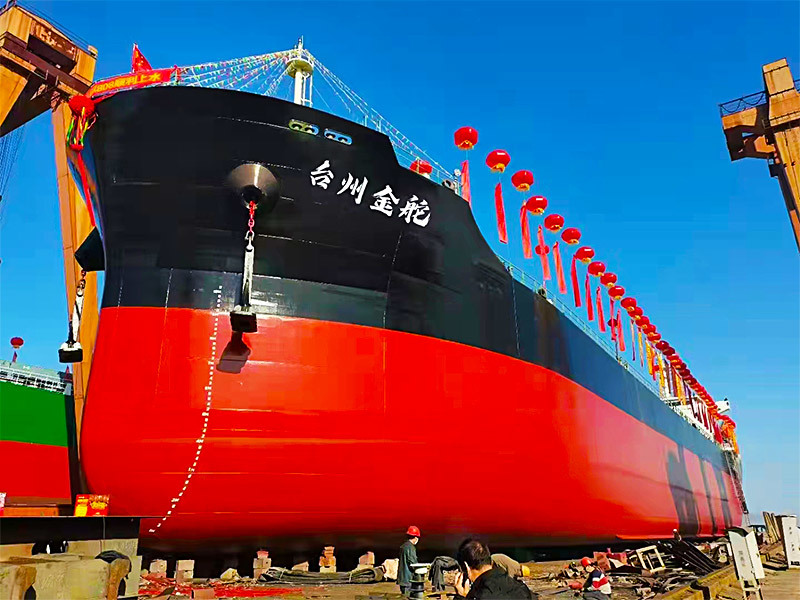
A Deep Dive into the Design of 93000 DWT Unlimited Sailing Area Ships Table of Contents 1. Introduction to 93000 DWT Unlimited Sailing Area Ships 2. The Importance of DWT in Maritime Operations 3. Key Design Principles of 93000 DWT Ships 4. Hull Structure and Materials 5. Propulsion Systems and Efficiency 6. Advanced Navigational Technologies 7. Environmental Sustainability in Ship

TAIZHOU JINDUO SHIP BUILDING CO.,LTD
Add:
Juding International Building, Yijia Road, Jiaojiang District,Taizhou City, Zhejiang Province
Tel:
E-mail:
Whatsapp:
Wechat:
+86 15726978366


SAF Coolest v1.3.1.2 设置面板 OWSSD-ZYOB-ASSXE-ZWZ
无数据提示
Sorry, the current column is being updated, so stay tuned!
You can check out the other columns or go back HOME
V1.3.1 SVG图标库请自行添加图标,用div包起来,并命名使用
Privacy
The Software respects and protects the personal privacy of all users of the Services. In order to provide you with a more accurate and personalized service, the Software will use and disclose your personal information in accordance with this Privacy Policy. However, the Software will treat such information with a high degree of diligence and duty of care. Except as otherwise provided in this Privacy Policy, the Software will not disclose or provide this information to third parties without your prior permission. The Software may update this Privacy Policy from time to time. You will be deemed to have agreed to this Privacy Policy in its entirety when you agree to the Software Service Use Agreement. This Privacy Policy is an integral part of this Software Service Use Agreement. 1. Scope of ApplicationIn your use of the Software's network services, the Software automatically receives and records information on your cell phone, including, but not limited to, your health data, the language used, the date and time of access, information on hardware and software characteristics, and data on webpage records of your needs; 2. Use of InformationAfter obtaining your data, the Software uploads it to the server to generate your leaderboard data so that you can better use the Services. The Software will upload your data to the server to generate your ranking data so that you can use the service in a better way. 3. Information Disclosure 3.1 The Software will not disclose your information to untrusted third parties. 3.2 In accordance with the relevant provisions of the law, or the requirements of administrative or judicial bodies, disclosure to third parties or administrative or judicial bodies; 3.3 If you appear to violate the relevant Chinese laws, regulations or relevant rules, it is necessary to disclose it to a third party; 4. Information Storage and Exchange The information and materials collected by the Software about you will be stored on the servers of the Software and/or its affiliates. The information and data may be transferred to and accessed, stored and displayed outside of your country or region or the country in which the Software collects the information and data. 5. Information Security When using the Software's network services to conduct online transactions, you will inevitably disclose your personal information, such as contact information or postal address, to the counterparty or potential counterparty. Please protect your personal information and provide it to others only when necessary. If you find that your personal information has been compromised, please contact the software's customer service immediately so that the software can take appropriate measures.