





news
Exploring the 81,000 DWT International Routes: A Comprehensive Guide to Bulk Carriers
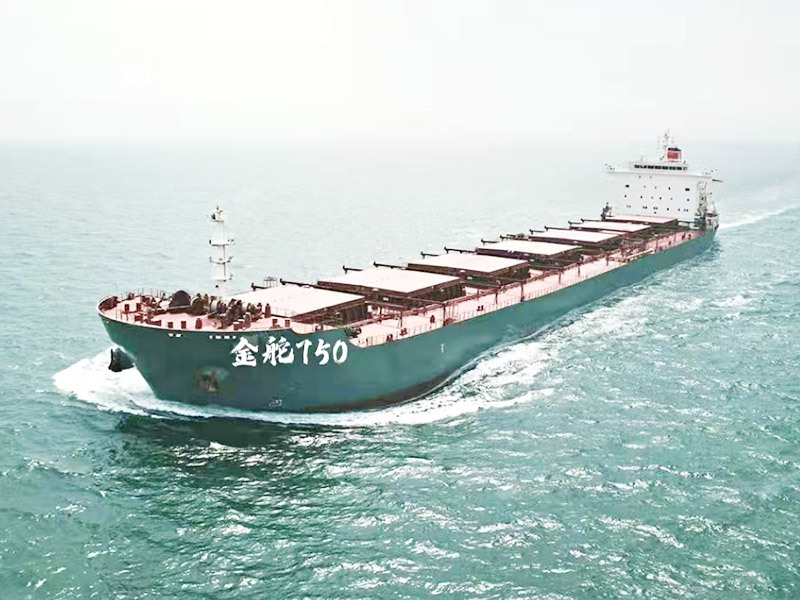
One of the key features of these bulk carriers is their design, which prioritizes cargo capacity and fuel efficiency. With a deadweight of 81,000 tons, these vessels are equipped with large holds that can accommodate diverse bulk cargoes. The hull design is optimized to minimize resistance, allowing for smoother navigation through various sea conditions. This efficiency not only reduces operational costs but also contributes to a lower environmental impact, making these carriers increasingly appealing in today’s eco-conscious shipping landscape.
When it comes to operating on international routes, several factors influence the choice of specific pathways. The primary consideration is the nature of the cargo and its destination. For instance, routes to major ports that handle commodities such as grains or minerals are prioritized. Additionally, geopolitical factors, such as shipping regulations and trade agreements, must be taken into account. Bulk carriers often follow established maritime lanes that offer safe passage and reduced transit times.
Moreover, the scheduling of voyages is crucial for maximizing efficiency. Operators of 81,000 DWT bulk carriers must consider port availability, loading and unloading times, and potential delays due to weather or other unforeseen circumstances. Advanced technologies, including GPS tracking and automated scheduling systems, are increasingly being utilized to enhance route planning and ensure timely deliveries.
The crew operational management on these vessels is another critical aspect. Training for personnel aboard 81,000 DWT bulk carriers focuses on safety procedures, cargo handling, and navigation skills. Ensuring that crew members are well-prepared to manage the complexities of international shipping operations is vital for maintaining safety standards and operational efficiency.
In conclusion, the 81,000 DWT international routes bulk carrier stands as a cornerstone of maritime logistics. Its design, operational capabilities, and adaptability to various international routes make it an essential asset in the shipping industry. As global trade continues to evolve, staying abreast of the developments and challenges faced by these vessels will be crucial for professionals involved in maritime transportation. Understanding these factors will not only enhance operational strategies but also contribute to a more sustainable shipping future.
Other news

Understanding the 83,500 DWT Inshore Bulk Carrier: A Comprehensive Guide
The 83,500 DWT (Deadweight Tonnage) inshore bulk carrier is a specialized vessel designed for the efficient transportation of bulk commodities in coastal and inland waters. With a deadweight capacity of 83,500 tons, these carriers offer a unique blend of size, maneuverability, and versatility, making them invaluable in the shipping industry. One of the primary advantages of the 83,500 DWT inshore
Investigating the Economic Impact of 85000 DWT Inshore Area Bulk Carriers
Investigating the Economic Impact of 85000 DWT Inshore Area Bulk Carriers Table of Contents 1. Introduction to 85000 DWT Inshore Area Bulk Carriers 2. Economic Significance of Bulk Carriers 3. Enhancing Operational Efficiency 4. Trade Implications in Maritime Shipping 5. Impact on Local Economies 6. Environmental Considerations 7. Future Prospects of Bulk Carriers 8. Frequently As

Navigating Safety: A Guide to 93000 DWT Bulk Carrier Features
Image Source: statics.mylandingpages.co A 93000 dwt unlimited sailing area bulk carrier relies on reinforced hull structure, fire detection and suppression, life-saving appliances, integrated navigation and communication, cargo monitoring, and compliance systems. These features protect crew, cargo, and vessel in demanding bulk trades. Operat

TAIZHOU JINDUO SHIP BUILDING CO.,LTD
Add:
Juding International Building, Yijia Road, Jiaojiang District,Taizhou City, Zhejiang Province
Tel:
E-mail:
Whatsapp:
Wechat:
+86 15726978366


SAF Coolest v1.3.1.2 设置面板 OWSSD-ZYOB-ASSXE-ZWZ
无数据提示
Sorry, the current column is being updated, so stay tuned!
You can check out the other columns or go back HOME
V1.3.1 SVG图标库请自行添加图标,用div包起来,并命名使用
Privacy
The Software respects and protects the personal privacy of all users of the Services. In order to provide you with a more accurate and personalized service, the Software will use and disclose your personal information in accordance with this Privacy Policy. However, the Software will treat such information with a high degree of diligence and duty of care. Except as otherwise provided in this Privacy Policy, the Software will not disclose or provide this information to third parties without your prior permission. The Software may update this Privacy Policy from time to time. You will be deemed to have agreed to this Privacy Policy in its entirety when you agree to the Software Service Use Agreement. This Privacy Policy is an integral part of this Software Service Use Agreement. 1. Scope of ApplicationIn your use of the Software's network services, the Software automatically receives and records information on your cell phone, including, but not limited to, your health data, the language used, the date and time of access, information on hardware and software characteristics, and data on webpage records of your needs; 2. Use of InformationAfter obtaining your data, the Software uploads it to the server to generate your leaderboard data so that you can better use the Services. The Software will upload your data to the server to generate your ranking data so that you can use the service in a better way. 3. Information Disclosure 3.1 The Software will not disclose your information to untrusted third parties. 3.2 In accordance with the relevant provisions of the law, or the requirements of administrative or judicial bodies, disclosure to third parties or administrative or judicial bodies; 3.3 If you appear to violate the relevant Chinese laws, regulations or relevant rules, it is necessary to disclose it to a third party; 4. Information Storage and Exchange The information and materials collected by the Software about you will be stored on the servers of the Software and/or its affiliates. The information and data may be transferred to and accessed, stored and displayed outside of your country or region or the country in which the Software collects the information and data. 5. Information Security When using the Software's network services to conduct online transactions, you will inevitably disclose your personal information, such as contact information or postal address, to the counterparty or potential counterparty. Please protect your personal information and provide it to others only when necessary. If you find that your personal information has been compromised, please contact the software's customer service immediately so that the software can take appropriate measures.